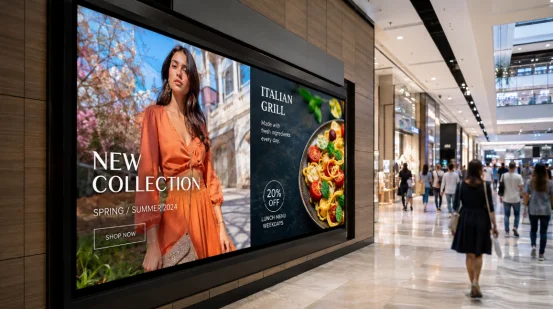
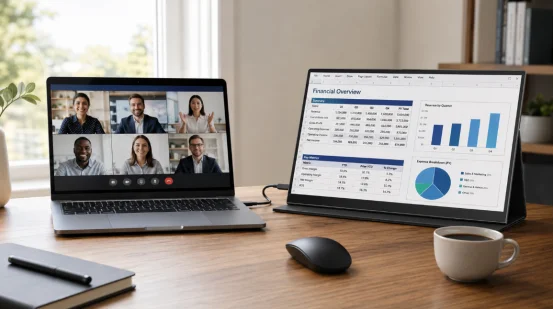
Picking a screen for an indoor advertising display might seem easy. But looking closer changes things. Two main choices exist: IPS and VA. They set up their liquid crystals differently. Because of this, they handle colors and viewing angles in different ways.
A screen might look great in a dark room but washed out in a bright shop. This guide explains IPS vs. VA panels simply. You will learn how every IPS panel and VA panel acts in digital signage. You will also see how to pick the right tech for your project.
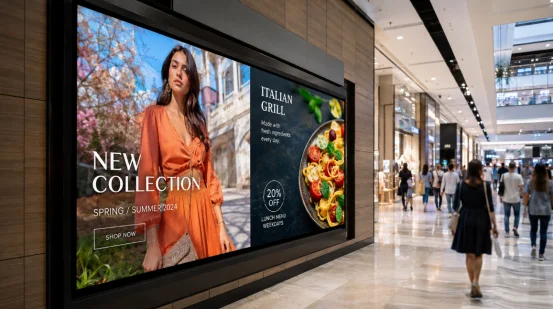
What Is the Difference Between IPS and VA Panels?
IPS and VA are both LCD screens. The big difference is how liquid crystals shift when power turns on. This tiny change alters the viewing angle, contrast ratio, and black levels. For most indoor advertising displays, the best pick depends on where people stand. It also depends on the room lights.
How Does an IPS Panel Work?
An IPS panel lines up its liquid crystals evenly. This lets light shine through very smoothly. Because of this, you get wide viewing angles and steady colors. Folks can look at an IPS panel from the side without the picture turning gray. 、
Product photos and menu boards look true to life. If your advertising display sits in a wide hallway, this color matching matters. IPS screens might glow a bit during dark video parts. Their contrast ratio is normally lower than a VA panel.
How Does a VA Panel Work?
A VA panel stacks liquid crystals straight up when off. This blocks extra back light. You get deeper black levels and a higher contrast ratio. Dark backgrounds look rich. Bright words really pop out. This helps in theaters and nice restaurants. It works best if people look straight on.
A VA panel makes night videos feel bold. But there is a catch. Colors and brightness shift when you step away from the center. In a big hall, it might ruin your message for side viewers.
Which Panel Offers Better Picture Quality for Digital Signage?
Picture quality is more than one score. You must weigh color accuracy, contrast ratio, brightness, and viewing distance together. A commercial display might have great specs. But it can still look awful if the panel type does not fit the room.
IPS vs. VA Panels: Viewing Angle and Color
IPS normally wins if people stand all over a room. Its viewing angle hits around 178 degrees. You see less color shifting compared to many VA screens. This makes an IPS panel smart for menu boards.
VA panels show pretty colors from the front. But the picture loses brightness from the side. If shoppers walk past fast, IPS is usually safer.
Contrast Ratio and Black Levels
VA easily wins with contrast ratio. Normal VA panels hit around 3,000:1. Many IPS panels sit closer to 1,000:1. Higher contrast makes videos and dark photos look amazing. However, indoor advertising displays normally show bright ads during the day. In daytime setups, IPS color steadiness often beats deep blacks.
Motion, Response Time, and Content Type
Both screens play smooth video if they have good parts inside. For still pictures, you will barely see a difference. For fast sports clips, check the full commercial display specs. Do not judge the panel type alone. Refresh rate and video quality change the motion.
When Should You Choose an IPS Panel?
Pick an IPS panel when folks need to see the screen clearly from many spots. You see this in malls and schools. Wide viewing angles let more folks read the text. IPS is also great when getting colors perfect is key. A solid IPS image makes your ads look the same everywhere. Also, mind your screen placement. A screen hung behind glass might catch bad glare. In that case, anti-glare coating matters just as much as the IPS label.
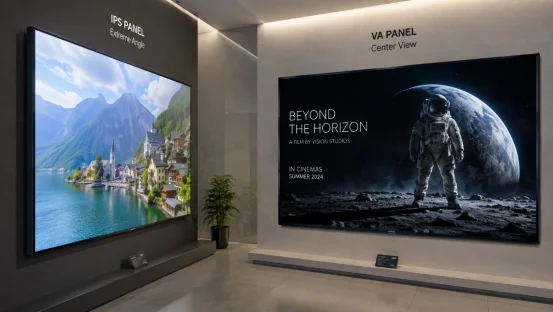
When Is a VA Panel the Better Choice?
A VA panel does a great job when people stand near the middle. It is perfect for fancy indoor advertising displays playing dark videos. VA is also a smart pick if you control the room lights. If you stop bright lights from hitting the screen, deep blacks pop. Before buying VA, track how people walk by. If folks approach from a 45-degree angle, test a sample screen first.
What Else Should You Check Before Buying an Advertising Display?
The panel type is just one piece of a good system. You must also check brightness and cooling. For a commercial display running all day, find a screen built for long use. Size and hanging height are huge too. A 55-inch screen looks fine behind a desk but tiny in a long hallway. Plan your cables before hanging it up.
How Can YIAISIGN Support an IPS or VA Display Project?
Picking a panel is easier when the seller fits the screen to your exact room. YIAISIGN makes many commercial display products for indoor advertising. This includes digital signage screens and kiosks.
For an IPS or VA job, seller help is key. They help you pick the screen size and mounts. YIAISIGN offers choices for different rooms. You can tell them the viewing distance and lighting. Then, you can compare a good IPS panel with a VA panel in real life.
Final Recommendation: IPS or VA for Indoor Advertising Displays?
Pick IPS if a wide viewing angle and steady colors are your goals. Pick VA if people look straight at the screen and need deep contrast. For most public indoor advertising displays, IPS is the safest bet. For dark rooms playing heavy videos, VA makes a richer picture. Always test both screen types first.
FAQ
Q1: Is an IPS panel better than a VA panel for digital signage?
A: An IPS panel is better for wide viewing angles and steady colors. A VA panel wins when deep contrast matters most.
Q2: Which panel has a higher contrast ratio?
A: VA panels usually offer a higher contrast ratio. They often sit around 3,000:1. Many IPS panels stay closer to 1,000:1.
Q3: Are IPS panels suitable for indoor advertising displays in bright stores?
A: Yes. With good brightness and anti-glare screens, they stay easy to read.
Q4: Does a VA panel look bad from the side?
A: Not always. But brightness and colors change a lot at wide angles.
Q5: What should you compare besides IPS vs. VA panels?
A: Always check brightness, daily run hours, cooling, and plugs before buying an advertising display.