When picking an electronics manufacturer in Shenzhen, you need to do some standard checks. First, read their legal documents. Next, watch how they build things and read their quality logs. Ensure their setup fits your exact product.
A solid Shenzhen electronics manufacturer audit follows one single unit. It tracks one specific batch across the whole plant. Then, compare their paperwork directly to the real floor work. This guide helps buyers evaluate an OEM or ODM supplier. Use it before placing a new order or shifting production.
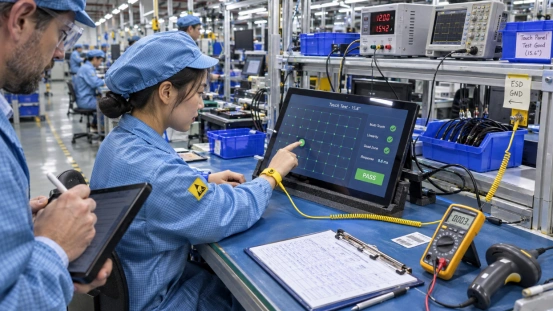
Quick Checklist
Check if the business license, the audit address, and the factory in their notes all match.
Follow one batch of items from the new parts all the way to the final check.
Find out which jobs happen in the factory and which jobs go to outside helpers.
Make sure the product samples, BOM updates, test papers, and certificates fit together.
Give every problem a person to fix it, a deadline, and proof to close it.
What Should You Verify Before Visiting an Electronics Factory?
First, look at who the business really is and what you plan to check. Make sure the people, the address, and the work steps belong to the exact supplier on your price quote and contract.
Confirm the Legal Entity and Production Address
Ask them to show their business license and unified social credit code. You also want their legal name and exact factory address. Look up the company on China’s National Enterprise Credit Information Publicity System. Then, match this company name with your contract, bill, bank details, and the factory’s front desk log.
If the names are different, write down how they connect. Ask them which company pays the workers, keeps the quality notes, and handles the fixes. Always visit the real factory address listed in your plan.
Define the Product and Process Scope
Write down the model, market, total number, and what the item does. Add the box details and the shipping date. You must also list needs for the screen, touch, wireless, operating system, ports, and extra parts.
Ask the factory for their process map, BOM, and control plan. Get their latest work steps and test steps. Take note of any updates. A single model name might use different screens, boards, power plugs, or firmware.
How Can You Check Whether the Factory Fits Your Product?
Look at what the factory actually does and compare it to what your product needs. Your Shenzhen factory audit checklist must check if they can build your exact setup over and over again. This includes any work they send to outside shops.
Review Similar Models, BOMs, and Engineering Changes
Match a sample item with the approved BOM. Look closely at the screen, touch glass, main board, and memory. Check the wireless module, power plug, plastic shell, stand, and firmware. Ask the boss how a new design change gets to the buyers, the assembly lines, the testers, and the shipping team.
Look at a recent batch of similar items. Make sure the serial numbers link the finished goods to their raw parts and test scores. The sample version must match your quote and order.
Map In-House and Outsourced Processes
Walk through the process map with the floor boss. Write down which steps happen right there. These might be putting parts together, adding firmware, testing, aging, checking, and boxing. Find out who does the PCB assembly, plastic molding, painting, and special tests.
For outside work, read how they pick those helpers. Check their passing rules, change alerts, and bad-part reports. See how the main factory tracks the outside batches. Learn how they get and check that outside work.
What Should You Inspect on the Production Floor?
During an electronics factory inspection, follow one item from the parts room, through the line, to the final test. Watch what the worker does and compare it to the paper on the wall.
Follow One Lot from Incoming Parts to Finished Goods
Pick a work ticket and track it forward and backward. From a finished box, find the work line, the date, the test score, and the parts used. Next, track one box of raw parts to the final items that used it. Make sure the model and version numbers match.
Look at how they check new screens, power plugs, boards, wires, and shells. Read their testing rules and passing scores. Check how they handle bad parts and what they do with them.
Observe ESD, Assembly, Programming, and Functional Tests
For bare boards, look at their ESD wires, wrist bands, test tools, and daily logs. Watch how they hold the screens and compare it to their rule book. Make sure they test the firmware.
Ask a worker to run a normal test for you. This test might check the screen, touch, Wi-Fi, ports, buttons, sound, brightness, turning, or basic system jobs. Ensure that broken units sit in a safe spot and get tested again after they are fixed.
Which Quality Records Should You Sample?
Good notes should link a rule to a real result and a specific worker. In a supplier quality audit, pick some station notes and batch papers. Then, match them with the items being built right now.
Check Incoming, In-Process, and Final Inspection Records
Look at notes for new parts, first items, line checks, final tests, and aging. Check the model, update number, batch, date, rule, score, and the tester’s name. Use these filled-out papers as proof of their daily choices.
Compare their test limits with your approved rules. Read the notes for broken items, fixes, retests, and final releases. Ask them how new software or part changes change the test rules.
Review Calibration, Traceability, and Corrective Actions
Pick a testing tool. Check its ID, its tune-up status, its due date, and what they do if it breaks. Tracking should link finished boxes to their raw parts and line notes.
Look at recent mistakes. Find the root cause, how they stopped it, who fixed it, the deadline, and the final check. Closed problems must show proof from newer batches.
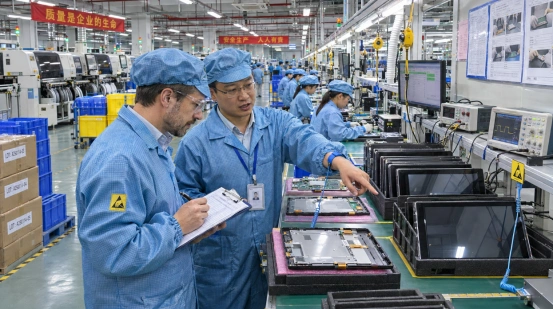
How Do You Assess Supplier Control and Product Compliance?
Test their electronics manufacturing skills. Look at how they manage big suppliers, track changes, and keep legal proof for your product and country.
Trace Critical Components and Subcontractors
Look hard at the screens, power plugs, wireless pieces, memory, and main boards. Check how they approve those suppliers and allow backup parts. Look for batch tags and recent papers.
In an OEM electronics supplier audit, find the outside jobs and outside helpers. Read their notes and change-approval steps. Match them up with the buy order and the control plan.
Match Certificates and Reports to the Shipped Configuration
Ask for the certificates and test papers your country needs. Check the model, the legal maker name, and the factory spot. Also check the product family, rule book year, the testing lab, and the end date. Compare this setup with your order BOM, radio parts, power plug, and firmware.
Look up China management-system certificates using the CNCA certification information service. Make sure the company name and work scope match. Keep this good proof in your order folder.
How Should You Score and Follow Up on a Factory Audit?
Agree on the scoring system before you go. Mark each point as passing, small issue, big issue, or not checked.
Use Evidence-Based Ratings and Clear Finding Owners
Write down each problem’s rule, proof, risk level, assigned person, due date, and closing proof. Add a picture or a paper link if they let you. Focus first on safety, tracking, exact parts lists, and catching bad items. Use your own approval rules to deal with very risky problems.
Verify Corrective Actions Before Production Release
Ask them to stop the leak and fix the root problem. Make sure it has a person in charge and a set date. Read the updated work rules or newer batch scores before you close the issue. Before you let them build, put the golden sample, the BOM version, test rules, legal papers, and audit fixes into one big folder.
How Can Product-Specific Audits Support Digital Display Projects?
Start with the exact product setup. The lineup includes a 10.1-inch Wi-Fi frame with a plastic frame, 1280×800 resolution, and 5-point touch. It also has a slim 15.6-inch model with a plastic frame, 1920×1080 resolution, and 10-point touch. You will also see 21.5-inch and 32-inch wood-and-plastic art frames, plus all-in-one displays starting from 23.6 inches. Every single one needs its own matching BOM, work papers, tests, and legal folder.
For a project with YIAISIGN, match the asked unit with their digital display product lineup. Plan your audit model by model. Check the sample, updates, software, tests, daily notes, floor work, and certificates. This forms the very heart of your electronics supplier due diligence.
FAQ
Q1: How Long Does an Electronics Factory Audit Take?
A: The time changes based on the number of products, how hard the work is, and outside helpers. Make a plan and a paper list before you set a date. Checking many items or many buildings takes extra time.
Q2: Can a Factory Audit Be Completed by Video?
A: A video call can check licenses, rules, paper notes, and live video of the work. But a real visit or a hired helper checks the true location, tools, part movement, and daily habits.
Q3: Should You Accept Outsourced Production Processes?
A: Yes, if the main factory names the helper. They must also control the rules and changes, track arriving goods, and test the results. Add those outside shops and their papers to your audit plan.
Q4: Which Documents Should You Request Before the Visit?
A: Ask for the business license, process map, product details, BOM, and control plan. Also get the work steps, test notes, tool check list, legal certificates, test reports, and mistake-fixing notes.
Q5: What Happens After a Factory Audit?
A: Send out your problem list with proof, risk levels, assigned people, due dates, and closing rules. Make sure you see real proof of fixes before you start mass building or close big risks.