A cheap quote can look good on Monday and become a headache by Friday. With an OEM touch display order, the real question is not only price. You need to know who controls the screen, touch panel, housing, firmware, sample changes, packing, and final inspection. A trading company may still be useful, but if you need custom work, you should know who is actually building the product.
Why Does Factory Verification Matter Before an OEM Touch Display Order?
Touch display supplier verification protects your budget, launch date, and reputation. A real OEM touch display manufacturer can usually answer technical questions faster because the engineering and production teams are closer to the project.
Cost, Control, and Accountability
An OEM touch display factory has more direct control over materials, process changes, and production timing. If brightness, housing color, interface position, or touch sensitivity needs changing, the request does not travel through several hands. That matters when your team is waiting for a sample before a trade show or pilot installation.
Project Risk Hides in Small Details
A touch display is not just a screen. It includes cover glass, touch sensor, display module, board, housing, ports, firmware, cable layout, packing, and test rules. One loose detail can delay approval. A real factory should explain these parts without acting like every request is easy. Sometimes the honest answer is, “that change needs a new sample.” Buyers should actually like that answer.
What Product Portfolio Signals a Real Display Factory?
A useful first check is the supplier’s product range. Factories usually stay near one manufacturing chain. Traders often show many unrelated goods because they source from different workshops.
Narrow Product Family
For a display supplier, a focused range may include digital signage, touch all-in-one displays, portable monitors, advertising screens, digital frames, and related smart display products. That kind of portfolio makes sense. If the same supplier also sells shoes, kitchen tools, toys, and touch panels, slow down.
Real Technical Variants
A custom touch screen manufacturer should show practical variations, not just pretty product photos. Look for screen sizes, resolution choices, touch type, mounting style, housing material, waterproof options, app system support, power input, and interface choices. The YIAISIGN product range is a useful example of a display-focused catalog with smart display categories and ODM/OEM service entries.
How Can Website Evidence Separate a Factory From a Trader?
A website cannot prove everything, but it gives clues. A factory website often talks about products, processes, service scope, and customization. A trader’s site may look polished but stay thin on manufacturing details.
Factory-Level Pages Show Processes
Check whether the website mentions hardware service, software service, supply support, sample work, testing, and production quality control. These details matter more than a wide homepage banner. For how to verify a touch display supplier, read the pages that explain what happens after you send drawings or requirements.
Product Pages Mention Changeable Specs
A factory direct touch display page should mention changeable items such as brightness, touch panel, housing, waterproof protection, battery, resolution, logo, packaging, or software interface. If every answer is “yes, no problem” but no spec path is explained, that is not comforting. It is just noise in a nicer shirt.
What Documents and Factory Proof Should You Request?
Touch display factory audit work should combine online checks with documents. You do not need to behave like a detective, but you do need evidence before sending a deposit.
Business Scope and Certifications
Ask for the business license, export documents where relevant, product test reports, and certification records for the target market. Check whether the business scope matches display manufacturing or electronics production. For touch displays, also ask which certifications apply to the exact model, not just to a similar-looking product.
Factory Visit or Live Video Check
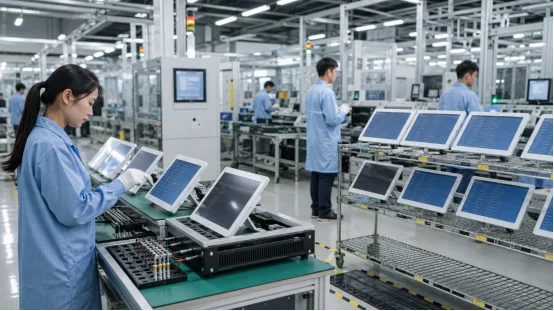
A live video call can show production lines, assembly benches, aging test areas, packing zones, sample shelves, and warehouse stock. Ask the supplier to show your product type, not only a lobby wall. If possible, use a third-party factory audit checklist for touch displays. It should cover equipment, staff, incoming inspection, process control, aging tests, and shipment checks.
How Should You Test OEM Capability Before Mass Production?
A supplier can look solid until the first sample request arrives. Sampling is where many weak suppliers show their limits.
Ask For an Engineering Reply
Send a short but complete brief. Include display size, resolution, brightness, touch points, usage scene, operating hours, housing needs, interface layout, software need, packaging, order quantity, and target market. A real OEM touch display factory should reply with questions. Good questions are a positive sign.
Use Samples to Expose Gaps
Sample review should check touch response, heat behavior, screen uniformity, port position, housing finish, logo placement, mounting fit, packing protection, and software behavior. For B2B display buyers, a sample is not a decoration. It is a small test of the whole production relationship.
What Red Flags Point to a Trading Company?
A trading company is not automatically bad. The issue is pretending to be a factory when the project needs factory-level control.
Too Many Unrelated Products
If the catalog jumps from touch displays to random consumer goods, the supplier may be sourcing rather than manufacturing. That can make custom changes slower and less predictable. The phrase OEM touch display manufacturer vs trading company is really about control, not pride.
Vague Answers and Perfect Promises
Watch for vague factory photos, no live production proof, unclear business scope, copied product images, and fast promises before anyone checks your drawings. If the salesperson cannot explain touch bonding, port placement, brightness choice, housing tooling, aging tests, or sample timing, you may not be speaking with the team that builds the product.
A Practical Benchmark For Supplier Shortlisting
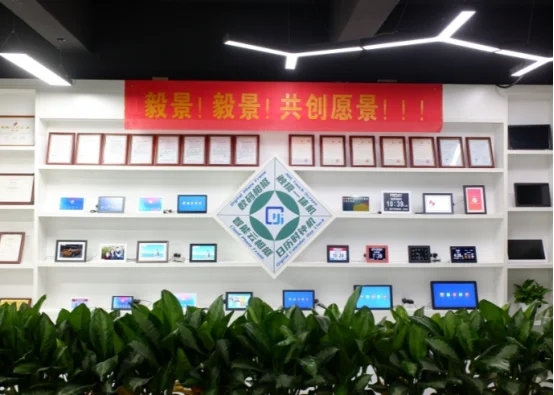
Once you know what to check, supplier comparison becomes calmer. YIAISIGN describes itself as a professional digital display screen manufacturer with more than 15 years of display manufacturing experience. Its official information covers smart display products such as touch all-in-one displays, digital signage, advertising screens, portable monitors, and digital frames.
For OEM/ODM work, the company lists hardware design, software service, logo, interface, packaging, appearance customization, sampling, production support, and supply service.
Its published smart factory material also mentions R&D strength, four production lines, and daily output of 3,000 pieces. In the context of touch display supplier verification, these are the kinds of connected capabilities buyers should look for, because they link product design, sample changes, production, and repeat supply instead of treating the screen as a simple resale item.
FAQ
Q1: How Can Buyers Identify a Real OEM Touch Display Factory?
A: Check product focus, business scope, factory proof, technical replies, sample quality, production process, and document consistency. A real factory should explain how the product is made and tested.
Q2: Is a Trading Company Always a Bad Choice?
A: No. A trading company can help with sourcing and communication. The problem starts when it claims factory control but cannot prove production, testing, or engineering capability.
Q3: What Should a Touch Display Factory Audit Include?
A: It should cover production lines, incoming inspection, assembly process, aging tests, sample control, packing, warehouse management, certifications, and staff who handle technical changes.
Q4: What Is the Best Way to Test Touchscreen OEM Service?
A: Send a detailed project brief and request a sample. Judge the supplier by its questions, sample accuracy, change response, test records, and ability to explain trade-offs.
Q5: Why Does Product Portfolio Matter in Supplier Verification?
A: A focused portfolio usually means the supplier works near one manufacturing chain. A very mixed catalog can signal a trading company, especially when technical details are weak.