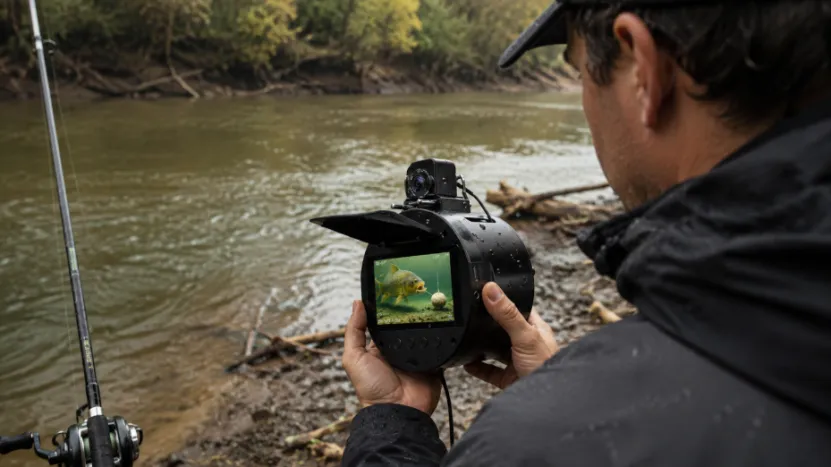
Dirty water makes fishing a tough guessing game. Things like mud, green algae, dark water, low sun, and dirt on the bottom make it super hard to spot fish. You also cannot easily see how they act around your bait.
Because of this, the best underwater fishing camera for murky water needs more than just a sharp lens. You must have an outdoor-friendly screen. It also needs bright LED lighting, solid waterproof armor, and a big battery.
This way, you stay out fishing without worrying about dead power. Do you fish in lakes, rivers, ice holes, or right by the shore? An underwater fishing camera helps you see better. Of course, you won’t get perfect video in brown water. No one can promise that. Still, you can spot your bait moving. You can see fish shapes and rocks. These little clues tell you where to throw your line next.
Why Is Murky Water So Difficult for Underwater Fishing Cameras?
Bad viewing ruins everything below the surface. Even a top underwater camera for fishing has a hard time. Dirt floats right by the lens. Also, sunshine fails to reach deep spots. Think about dark lakes, brown rivers, or shallow mud after a big rain. In these spots, the camera works overtime to show anything good.
Mud, Algae, And Sediment Block The View
A fishing camera for muddy water must handle tiny floating bits near the glass. Do not drag the camera on a soft bottom. If you do, the screen gets super cloudy fast. Instead, drop the camera down very slowly. Hold it just above the dirt. It stays close to the bait, but it will not get stuck in the mud.
Low Light Makes Fish Harder to Identify
Dark water hides tiny things. You might miss a moving fin, shaking bait, or a shy bite. That is why an underwater camera for low visibility fishing is a great tool. The far background might look blurry. But that is okay. You can still watch the most important spot. You can see your bait and the fish right next to it.
What Features Should You Look For in a Murky Water Fishing Camera?
Pick a murky water fishing camera based on real fishing trips. Do not just look at a paper list of parts. In dirty or dark ponds, you only need to ask one thing. Can you see well enough to catch more fish?
Choose Strong LED Lighting
A fishing camera with LED lights shows you bait, weeds, rocks, and fish nearby. The YIAISIGN model features 9 LED illumination lights. You can change how bright they are. This is super handy in muddy, dark, or deep spots. Being able to change the light is key. Too much glare bounces off floating dirt, which ruins your picture.
Pick HD Imaging And A Larger Screen
A 1080P underwater fishing camera gives you sharp details. You see fish clearly when they swim by. The 8-inch LCD display is also a huge deal. Sitting on a boat or river edge, a tiny screen hurts your eyes after a while. A bigger screen helps you spot tiny bumps and bites. This is true even if the water is pretty gross.
Is Night Mode Important for Low-Light Fishing?
Night mode is very helpful. You use it for early mornings, late nights, under ice, or way down deep. Dirty water blocks the sun. If you add dark shadows or cloudy skies, the camera really needs a boost.
Night Vision Helps Near The Bait
A night vision fishing camera lets you see the closest area very well. You probably will not see across the whole lake floor. However, you can see fish coming to your bait. You see if they turn away or bite softly. Seeing this helps you swap out your bait color, weight, or jigging style.
Light Control Is More Useful Than Maximum Brightness
Max brightness sounds great. But in stained water, it causes a bad glare. Start on medium light. Then, tune it up or down. If the picture looks like snow or totally white, turn the light down. Then, move the lens closer to the bait.
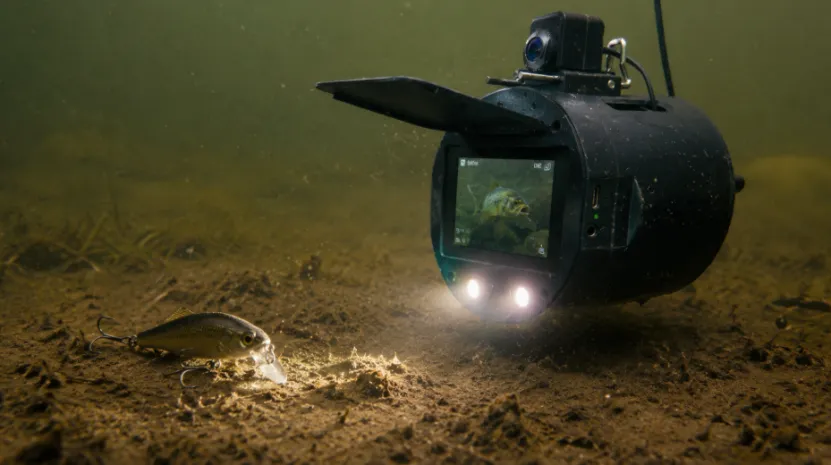
How Should You Position an Underwater Camera in Murky Water?
How you place the camera is just as important as how good it is. A powerful underwater fish camera can still fail. This happens if the lens points at swirling mud or sits too far from your hook.
Keep The Camera Close to The Bait
With an underwater camera for bait watching, keeping it close is best. In clear lakes, you can see far. In muddy water, you can only see a short way. Put the camera right near the bait. Just leave a little space. That way, fish will not hit the gear or run away scared.
Avoid Stirring The Bottom
Sink the camera very softly. Never pull it through the soft mud. In a moving river, put it where the water will not blow dirt over the lens. This is a tiny step. But it saves you from getting really mad.
Why Does Waterproof Design And Battery Life Matter?
Fishing cameras live in wet, rough, and freezing spots. Rain, huge splashes, deep dives, and long waits push the gear to its limits. For regular fishing, waterproof build and long power are not just extra treats. They are totally required.
IPX8 Protection Fits Real Fishing Conditions
An IPX8 waterproof fishing camera is truly made for going under. It handles more than tiny splashes. The YIAISIGN 8-inch fishing camera goes down to 20 meters deep. This makes it perfect for deep lake holes, river bends, and shore trips.
Long Battery Life Keeps The Session Moving
A portable underwater fishing camera needs to last the whole trip. The built-in 5000mAh lithium battery gives you up to 8 hours of fun. That fits a long day on the bank, a boat ride, or an ice fishing trip. Out there, finding a plug is too hard.
Why Consider YIAISIGN for Fishing Camera Selection?
YIAISIGN is a smart screen maker. They have over 15 years of skill making screens. This screen background is a big deal. Why? A fishing camera is more than a simple lens. The display screen actually decides what details you see outside. They offer OEM and ODM help, hardware building, and software plans. You can even customize logos and boxes.
Plus, they send out items safely to buyers everywhere. They have strong research power. They run 4 production lines. They can make 3,000 pieces every day. YIAISIGN is great for shoppers who want items that work well every time they fish.
The 8-Inch Fishing Camera Matches Common Murky Water Needs
The 8-inch fishing camera blends a nice LCD display with a sharp 1080P HD camera. It has a tough waterproof rating and 9 adjustable LED lights. It features a 0.6 to 36 meter wireless range. The gear runs on up to 8 hours of battery life. Are you at muddy lakes or dark rivers? These cool specs solve your biggest worry. They help you see enough stuff to fish happily.
FAQ
Q1: Can an underwater fishing camera work in muddy water?
A: Yes, but you cannot see as far as in clear water. A fishing camera for muddy water works great when you drop it close to the bait. Always tune the LED light level carefully.
Q2: Do LED lights help underwater cameras in murky water?
A: Yes. A fishing camera with LED lights shows bait, fish, and rocks close by. In super dirty water, medium light works better than full power.
Q3: Is 1080P resolution enough for underwater fishing?
A: Yes. A 1080P underwater fishing camera is awesome for watching your hook. You see fish coming and nice bottom shapes. It is great when matched with a bright screen.
Q4: How close should the camera be to the bait in poor visibility?
A: In bad water, set the camera very close to the bait. You want to see it clearly. This is way closer than in a clean lake. Hover it just above the dirt so you do not kick up mud.
Q5: Is an underwater camera useful for night fishing?
A: Yes. An underwater camera for night fishing helps you spot fish in the dark. Fixing the LED brightness is super important. Too much light just bounces off floating specks.