Sending digital frames across the world takes more than just extra foam. A 10.1-inch plastic frame with a 1280×800 display and 5-point touch needs its own kind of support. A slim 15.6-inch model with a 1920×1080 panel and 10-point touch needs a totally different setup. When you ship 1,000 units, one bad packing choice repeats over and over. If you pack four frames in each big box, one weak corner or loose cord can ruin 250 boxes.
A smart plan ties the product build, route, testing, pallet setup, and final checks together. This guide helps you build a solid bulk digital frame shipping plan.

What Can Damage Digital Frames During International Shipping?
Boxes fall down. Normal travel shaking causes power cords to scrape against the frame. Stacking heavy loads often crushes fragile screens. Spot these daily risks early. Do this before you approve any packing plan.
Screen, Touch Panel, and Housing Risks The display and touch layer need shielding from hard pokes, bending, and friction. Plush foam blocks ought to absorb the weight. These cushions should brace the rigid frame edge. Or, they can support the sturdy back cover. Keep all pressure entirely off the screen. Add a soft bag and protective screen film to stop scuffs. Snug boxing prevents unwanted sliding.
A 15.6-inch frame has a much wider surface area than a 10.1-inch unit. It naturally flexes differently. This happens even with identical plastic parts. Base stands, wall mounts, and cords need their own secure slots. A single loose plug quickly becomes a hard flying hazard inside the box. A long ocean trip gives it endless time to bounce around and break things.
Shock, Vibration, Compression, and Moisture
Your boxes will face drops, shaking, heavy stacking, damp air, and heat changes. The bottom boxes carry the most weight. Damp air can make cardboard soft and weak.
Write down how the boxes will travel. Note the stops, storage spots, pallet height, wait times, and final delivery steps in your packing plan. These simple facts help your test plan much more than just sticking a “fragile” label on the box.
How Should Digital Frame Packaging Be Built?
Good digital frame packaging works as one whole team. The screen cover, foam blocks, cord box, main boxes, and pallet must share the heavy load. They must avoid single pressure points.
Protect the Screen and Keep Pressure off the Display Area
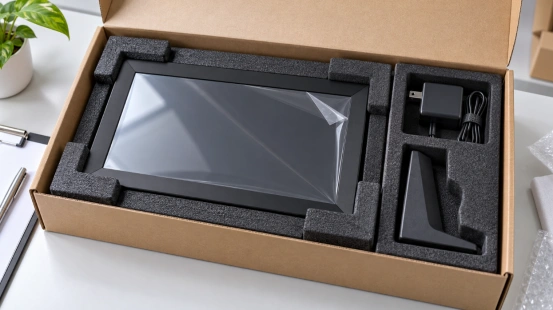
Start with a clean screen film and a soft sleeve. Use end caps, corner foam, or a full foam ring. This foam must hold only the strong parts of the frame. Leave empty space between the screen and the hard box walls. Pick the right foam type and thickness by testing the real packed model.
For digital photo frame shipping, close the inside box tight enough to stop shaking. But keep the box lid from touching the screen. Shake the box after packing. If you hear parts moving, fix it before you send it to the lab for testing.
Separate Accessories and Strengthen the Master Carton
Put all extra parts in molded spots or closed boxes far from the screen. Fit the small boxes into the big master carton tightly. Use cardboard dividers or foam blocks.
Pick the cardboard strength, flute style, tape type, and box direction. Set the total weight, stacking limit, and how many units go in each master carton. Test the whole loaded box to see if it can handle heavy weight and travel bumps.
Which Packing and Fragility Standards Should You Use?
Fragile electronics packaging rules give buyers, makers, labs, and shipping companies the same test language. The test gets harder based on box weight, shipping style, route, and handling steps.
Match the Test Sequence to the Shipping Route
Use ISO 4180 transport-package test steps or a distribution-cycle practice like D4169. Single boxes might need Procedure 3A. Pallet loads might need Procedure 3E. An international direct-import route might use Project 3M. Ask a certified lab to pick the right test level for you.
A digital frame drop test is just one small part. The full test must cover shaking, crushing, hitting, and weather changes. One drop just shows one danger on a long trip.
Set Functional and Cosmetic Pass Criteria
Set your passing rules first. After the tests, check the screen, touch spots, body, plugs, stand, and mounting holes. Check the extra parts and the boxes too. Turn on every single frame. Check the whole screen, wireless photo sharing if it has it, brightness, screen flipping, and local memory.
Write down exactly what a broken box or a broken frame means in clear words. Take photos before the test and after the test.
How Should You Palletize 1,000+ Digital Frames?
Palletizing digital frames turns hundreds of small boxes into one big block. The pattern must stop sliding, protect edges, and keep the bottom boxes from crushing.
Build a Stable, Repeatable Pallet Pattern
Keep every box fully on the wood pallet. Boxes hanging off the edge will break and invite forklift hits. Use even rows and grip sheets if you need them. Add hard corner boards, a top cover, and tight plastic wrap. Test how tight the straps are before you approve it.
Write down the boxes per layer, total layers, full height, total weight, and box direction. Pick the pallet height based on box crush tests and expected wait times.
Control Moisture and Wood-Packaging Compliance
Make sure the boxes and pallets are totally dry. Pick moisture guards based on the route, season, and container state. Then test the guards in weather tests. Raw-wood pallets and crates often need special bug treatments and stamps under global wood rules. Check the rules for your destination country before you book the ship.
What Should You Check Before Container Loading?
Stopping international shipping damage starts early. Do this before 250 master cartons go into a big metal container. Final checks catch repeating mistakes while you can still fix them.
Approve a Golden Packing Sample
Keep one perfect packed unit and one perfect master carton. This golden sample shows where the foam goes. It shows the extra parts, labels, tape, box direction, and pallet layout. Check all production boxes against this golden one.
Check samples from different groups and different spots on the pallet. Follow a set plan. Check the model, number of parts, looks, power-on working state, touch, extra parts, box weight, and barcode scanning. For a model with a lithium battery, get its UN 38.3 test paper and current travel rules.
Record Inspection and Loading Evidence
Check the container floor, walls, roof, and doors. Make sure it is dry, smells clean, and has no holes. Take photos of the empty box, pallet tags, loading steps, bracing parts, closed doors, and seal lock number. Keep all test papers, check results, group records, and photos together. This helps you track any damage later.
How Can Product-Specific Packing Reduce Shipping Risk?
When your packing plan matches the exact frame, the maker’s product knowledge becomes very helpful. YIAISIGN makes 10.1-inch frames with 1280×800 displays. These use plastic bodies and 5-point touch. They also make slim 15.6-inch models with 1920×1080 panels and 10-point touch. Their different screen sizes, stands, and mounting holes need different foam setups and different test records.
Look at the digital display choices. Share the market, amount, box limits, pallet size, route, and final delivery steps. The packing plan can then match the right frame, parts, box build, and pallet setup.
FAQ
Q1: How Many Digital Frames Should Be Tested Before Shipping 1,000 Units?
A: Pick a number with an approved lab and a clear checking plan. Test full packed units first. Then check samples from different groups and pallet spots. One magic sample number does not work for every single order or trip.
Q2: What Is the Best Packaging for a Digital Photo Frame?
A: A smart pack uses screen film and a soft sleeve. It uses foam that holds the hard edge or back cover. It has a safe spot for cords, a tight inner box, and a tested master carton. The final sizes and foam stiffness depend on the exact model.
Q3: Are Fragile Labels Enough for International Shipping?
A: No. Labels help workers, but they cannot fix bad foam, weak boxes, untested routes, shaky pallets, and missing loading checks.
Q4: Do Wooden Pallets Need ISPM 15 Marks?
A: Raw-wood pallets and crates usually need approved bug treatments and stamps for global travel. Rules change based on the wood and the country, so check them before shipping.
Q5: What If the Digital Frame Contains a Lithium Battery?
A: Ask for the UN 38.3 test paper, battery details, packing steps, and current travel rules. The ship route and battery setup decide which air or sea rules you must follow.