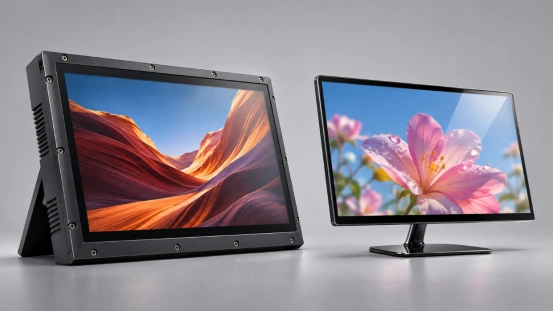
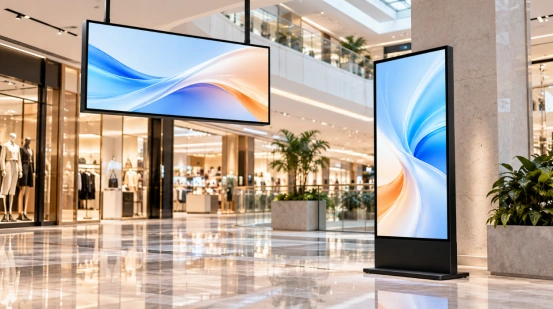
A 55-inch hanging display might play videos all day in a mall. A 21.5-inch floor-standing unit can show menus, maps, or news. Before these products ship, buyers and customs agents check some quiet details. They look at the exact model, power supply, radio module, label, and test records.
Commercial display certifications help you see if the finished setup meets local market rules. CE, FCC, and RoHS handle different risks. Your buying records must link each rule to the exact product you get. This includes the mainboard version and the power adapter.
What Do Commercial Display Certifications Cover?
The phrase CE vs FCC vs RoHS lumps three rule setups together. Each setup helps a distinct market. Each one needs unique proof. You should keep these roles apart. This simple step makes price quotes very easy to compare. Plus, it helps you spot a report built for a completely different model.
CE Marking for the European Market
CE is a stamp that makers place on items to obey European rules. Shoppers often hunt for CE certification for commercial displays. However, the true proof is the signed EU Declaration of Conformity. You must also get test reports, the product label, and technical sheets. Official EU laws state the maker must test the item and store these papers securely.
A display plugged right into the wall must pass safety and electromagnetic rules. Meanwhile, a unit featuring a wireless part must obey radio laws too. The exact path relies heavily on the finished product. This checks the adapter, cables, outer case, radio, and how folks will actually use it.
FCC Compliance for U.S. Sales
FCC compliance for digital signage watches radio-frequency emissions closely. A wired digital display typically acts as an unintentional radiator. Tacking on a wireless piece brings up a fresh radio test issue. Under FCC Part 15 rules, many digital gadgets use a Supplier’s Declaration of Conformity. Some still need full certification. This depends on the device sort and its final setup.
Class A handles units built for commercial or business spots. Class B handles units built for homes. Yet, businesses can use them as well. Your supplier must name the tested class. Then, they must hand over the proper report. Also, a radio module’s FCC ID must exactly match the module and antenna tucked inside the final display.
RoHS Compliance for Materials
RoHS compliance blocks ten bad elements in electrical goods. The top cap is mostly 0.1% by weight per pure part. Cadmium faces a tighter 0.01% rule. Your check needs to cover solder, wires, plugs, and normal plastics. Also, inspect the paint, boards, panel assembly, and boxed accessories.
A simple letter gets you going. Better records link maker notes, risk reports, and test facts directly to the product bill of materials. This matters a lot. Factories might swap a plastic shell or wire cover right after you pass the sample.
Which Product Details Change the Compliance Route?
Commercial displays arrive in many forms. Product files may list 23.6-inch, 27-inch, and 32-inch all-in-one machines. These use 1920 × 1080 panels. They also feature floor-standing or hanging signage. Folks place them in retail shops, airports, hotels, and factories. Yet, size is merely one piece of the puzzle.
Wireless Modules and Mainboards
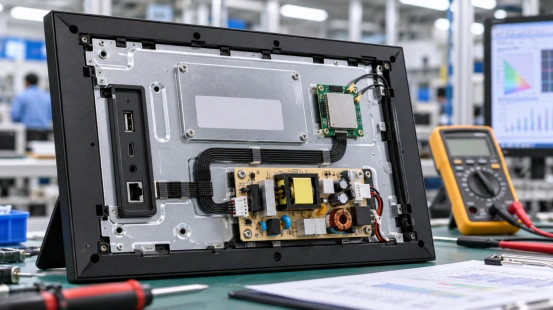
Wireless sharing and remote content control bring in fresh parts. Touch control requires extra boards. Live updates need antennas and software radios. You must note the module model and antenna type before testing. A later mainboard swap can shift test results. This makes your early digital signage certification file useless.
Power, Enclosures, and Interfaces
Power boards, outer adapters, and metal shields affect safety tests. Cable length and plug spots matter for electromagnetic checks. The carton label is important too. Busy factory lines sometimes put an old adapter label on the right display. Your check sheet should compare the sample, report photos, rating label, manual, and final shipment.
Customization and Model Families
OEM display compliance needs a clear plan for product families. A shared case might fit a few screen sizes. Still, every single model must match what the report says. Ask the lab exactly which versions they tested. Put the approved parts in your purchase order. Write down any change made on the factory line.
How Can You Check Supplier Documents?
A good commercial display compliance check starts by matching papers. Logos on a sales flyer tell you very little. Model numbers, company names, and hardware versions give you real facts. Standards and dates help you verify the truth.
Match Every Document to the Product
Check the brand, maker name, address, and model. Look at the power rating, radio module, and report owner. Next, compare the report photos with your real sample. For wireless products, read the radio grant and host label. Look at antenna rules and user guides. For RoHS, link the letters to your current bill of materials.
Read the Evidence Behind the Logo
Ask for the EU Declaration of Conformity and CE test reports. Get the FCC SDoC paper, Part 15 report, and RoHS records. Keep them safe with your approved sample file. Does the mainboard, adapter, radio, panel, or case change? If so, send that change for a technical check before you start mass production.
What Goes Wrong During Procurement?
Many problems start with a paper that just looks close enough. A paper might show a similar model name but test a different power board. A radio ID might fit the module, but the main display still lacks the right emissions proof. Vague RoHS words might point to parts from an old bill of materials. Check the whole paper chain before you pay the final bill.
How Can a Supplier Support Model-Specific Compliance?
Once your check sheet is ready, picking a supplier becomes about controlling the exact build. YIAISIGN makes floor-standing and hanging digital signage. They build all-in-one machines, advertising displays, and portable monitors. Their tested setups include remote content control, touch input, and wireless functions. They feature 1920 × 1080 panels, custom hardware, and 24/7 display use.
These details give your compliance check clear limits. You can look through the commercial display product range. Pick the size and setup you want. Then, tell them your target market and radio needs. Share your power setup, plug types, and branding needs. This gets you a model-specific document check.
FAQ
Q1: Which commercial display certifications do you need for the European market?
A: Items under European laws usually require CE marking. Electrical screens need a RoHS check, too. Specific CE rules rely on voltage and radio features, plus daily use. Request a signed EU Declaration of Conformity. Tie test reports straight to your exact model.
Q2: Is CE certification for commercial displays valid for U.S. sales?
A: No, CE applies strictly to Europe. U.S. sales must meet FCC rules for radio-frequency emissions. Local building codes or buyer demands might require extra safety checks. Build a completely separate U.S. compliance list for the finished display.
Q3: Does a wireless commercial display need an FCC ID?
A: A wireless piece typically requires full FCC certification and a unique FCC ID. Using a pre-tested radio module is an option. However, the final product must strictly obey the module’s approved antenna, layout, and label guidelines. The main host display still needs a separate digital-device emissions check.
Q4: Can one report cover several screen sizes?
A: A report can cover a whole product family. But the paper must list the versions, and the tests must cover the differences. Ask the factory to show the exact sizes, mainboards, and power supplies. Check the panels and cases too. A similar product name is never enough proof.
Q5: What should you check before mass production?
A: Lock in the mainboard, radio, antenna, and panel. Freeze the power supply, case, cables, labels, and manuals. Match every single part to the approved sample and compliance file. Put strict change rules in the purchase order. The factory must tell you about part swaps before they build anything.