
Why Technical Compatibility Is Becoming a Key Buying Factor
Although the market for dual screen speakers is expanding steadily, a high percentage of consumers remain to assess goods on superficial factors like screen size, look, and cost. That works for beginner products, but those elements are lacking in typical deployment settings.
The device does not function independently in real-world settings, such as exhibitions, service stations, hospitals, and international offices. It must maintain stability across various tongues and contexts, connect to computer networks, and even occasionally integrate with its internal structures. This is where technical compatibility starts to matter.
From a product sourcing perspective, many issues do not appear during sample testing. They show up later: unstable connections, limited language expansion, software conflicts, or poor microphone performance in real environments. These are not spec sheet problems. They are system-level problems.
As the category matures, dual screen translator devices are shifting from standalone gadgets to scenario-based communication terminals. Compatibility is now part of the core product value, not an afterthought.
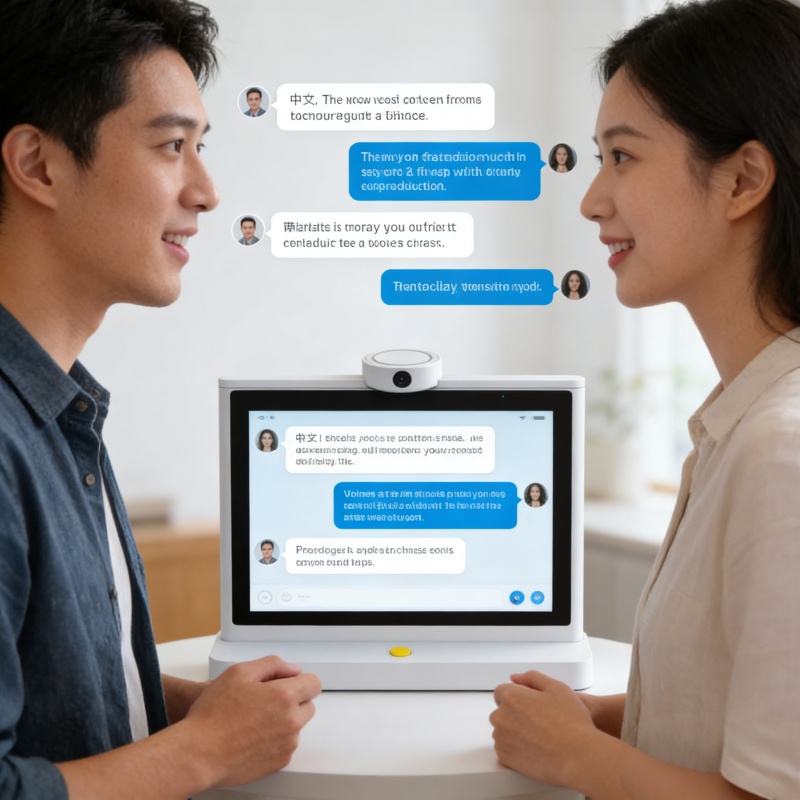
Mainstream Product Architectures in the Market
From the point of view of structure and technology, most of the double screen translation equipment is mainly divided into three categories: integrated equipment, separation equipment based on android system, and based on personal computer or a half open system of the equipment.
Currently, Android all-in-one devices combine the screen, processor, microphone and translation software into a single device and are easy to deploy. However, their flexibility depends largely on the software environment provided by the manufacturer.
Split device systems feature two connected screens that typically communicate via Bluetooth or a wireless network. Each user operates their own screen independently. This structure enhances the interactive experience, but also introduces additional complexity in connection stability and synchronization.
Or open system based on personal computer equipment is relatively rare, but it is becoming more and more important in the enterprise project. Such systems can be integrated with external software, application interfaces, or customized translation engines. They offer the highest flexibility, but require more technical support as well as longer development cycles.
System compatibility: Comparison between Android and closed systems
Behind the double screen translation equipment, one of the most important technical decisions is the choice of operating system.
Some manufacturers use highly customised or locked-down versions of Android, which limit app installation or system-level changes. A closed system, on the other hand, its software under strict control, the user can’t be too much change, reduce the risk of a system crash but also limits the flexibility, in many cases, the language pack or function can only be updated by the original manufacturers.
From a practical point of view, buyers should decide as early as possible:
Is the product intended for fixed functional deployment, or does it require constant updates and personalization?
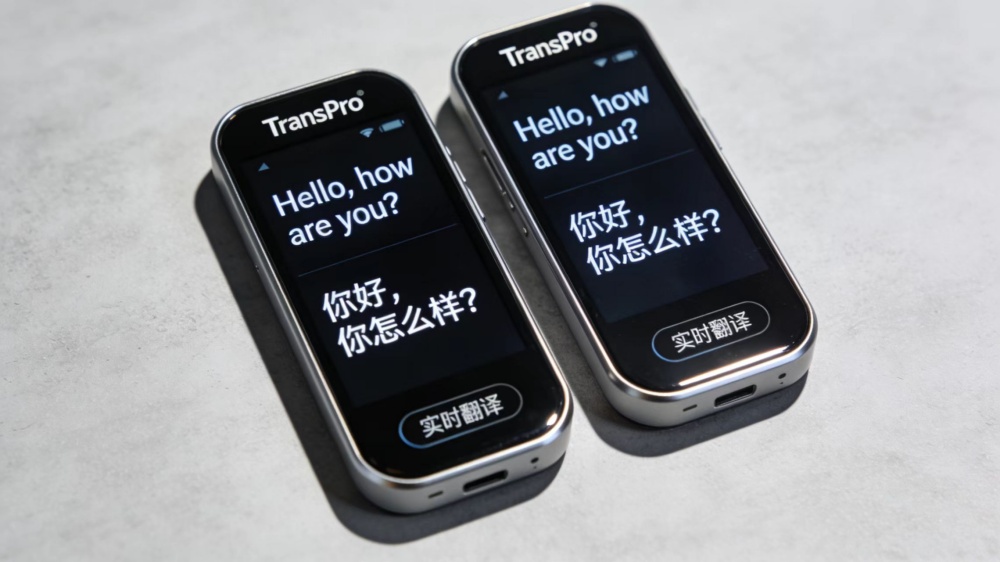
Translation Engine and Language Extension Features
Another crucial areas in terms of compatibility is the translation engine itself.
Some devices rely entirely on third-party cloud translation services. Such systems are easy to deploy and usually support multiple languages. Relying heavily on network quality, translation speed and accuracy will decrease significantly in the case of network instability.
Other devices combine cloud translation with local processing (edge artificial intelligence). This hybrid approach reduces response times and reduces long-term reliance on external services. Many products claim to support dozens of languages, but actually, not all language performance as well, for B2B type of application, the more important is to verify the specific performance in the target language, and language is not only calculated the total number of species.
Buyers working with niche markets or regional languages should confirm whether the system allows adding or upgrading language models in the future.
Audio hardware compatibility in real-world environments
The accuracy of translation does not only depend on the software, the quality of the audio input also plays a crucial role, especially in industrial or public Settings. High-end equipment, the use of the noise reduction algorithm combining with microphone array combination way, the system can effectively isolate the speaker’s voice, and improve the accuracy of recognition.
Connection and integration capabilities
Basic models typically support wi-fi and sometimes support bluetooth, but may not be able to meet the requirements of enterprise, in more advanced scenarios, the device may need to support Ethernet, API integration or compatible with the internal system.
The dual-screen translation device market is growing rapidly, moving from simple translation tools to integrated communication solutions.
From the point of view of technical compatibility, significant differences between the products, system architecture, translation engine, audio hardware and connectivity factors all play a role in the actual performance influence.
For enterprise purchasers, focusing on these deeper factors can yield long-term results, adapt to the operating environment, support future expansion, and maintain consistent performance across a variety of usage scenarios.


