
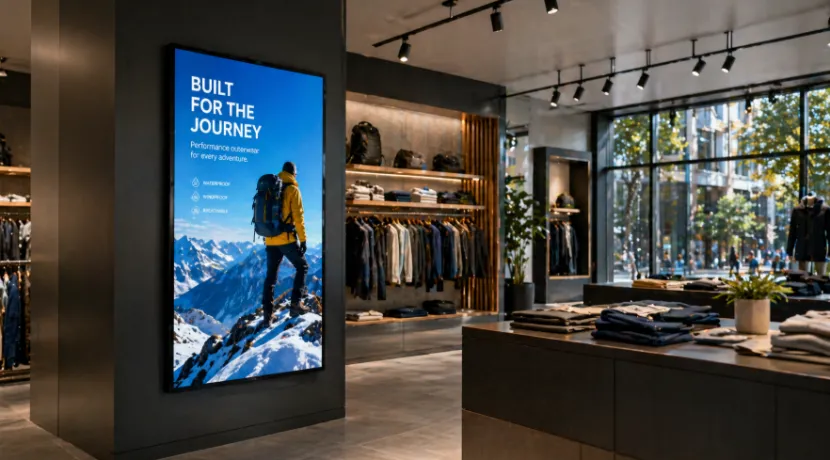
You open a new shop or update a lobby. The budget gets tight. You look at the empty wall and think, why not just run to the local electronics store and grab a big, cheap TV? It looks the same in the box.
But buying a consumer TV for digital signage is a classic trap. That cheap screen ends up costing double or triple down the line. A real commercial display lifespan outlasts standard televisions by years, saving you serious money and headaches.
Finding the right hardware takes actual work. YIAISIGN builds tough display tools for busy spaces like malls, airports, and exhibition centers. They focus on clear visuals and long-lasting parts rather than just pushing fragile plastic. Whether a store needs a custom digital signage display or a 55-inch digital signage unit hanging from the ceiling, their gear handles the stress of public environments. They supply solid machines that simply stay on, so you do not have to worry about blank screens scaring off buyers.
What Is the Fundamental Difference Between TVs and Signage?
Home TVs are made for living rooms. They expect you to watch a movie for maybe four to six hours, then turn them off. Commercial grade screens are stripped of useless parts like TV tuners and built entirely around durable panels. The metal framing is thicker, and the internal boards can take a beating from dust and grease. You get a tool made for business, not for Saturday morning cartoons.
Can Your Screen Handle 24/7 Continuous Operation?
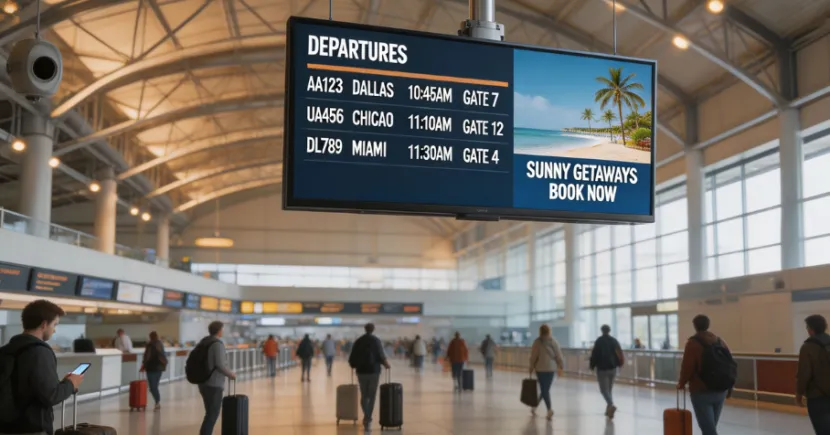
Leaving a home TV on all day and night burns out the backlight fast. The colors fade and the picture gets blurry. True business screens are engineered for 24/7 continuous operation. Take a suspended digital signage unit designed for retail stores and public spaces. It hangs from the ceiling, saves floor space, and runs constantly without breaking a sweat. It maintains reliability and longevity even in challenging environments. You plug it in, and it works around the clock.
How Does Heat Dissipation Affect Commercial Display Lifespan?
Heat kills electronics. Anyone who has left a phone in the direct sun knows it just shuts down. TVs in store windows face the same hot sun but lack proper display heat dissipation. The LCD panel cooks. When it gets too hot, the liquid crystals fail and cause isotropic blackout.
The screen turns into a dark, dead mirror. Good commercial units have heavy-duty cooling systems to push that hot air out. This directly extends the commercial display lifespan, keeping the hardware out of the repair shop.
Does a Consumer TV Warranty Cover Commercial Use?
This is where businesses lose the most cash. Read the fine print on a cheap TV box. The one-year warranty almost always says it is void if used in a commercial space. If that screen breaks in your restaurant after two months, you pay for a new one out of pocket. Professional units come with proper commercial warranties. Manufacturers know their gear belongs in a store, so they back it up with service agreements that actually protect your business.
Why Are Brightness and Anti-Glare Essential for Retail?
A living room is pretty dark. A retail store is packed with bright track lights, and windows let in glaring sunlight. A regular TV maxes out around 300 nits and acts like a mirror in a store. You end up seeing reflections of cars and shoppers instead of your menu. Business panels use Gamma anti-glare technology. This cuts the harsh light and keeps the picture comfortable to view. The visual presentation stays clear and vibrant.
How Does a Long Life Cycle Maximize Your ROI?
Replacing a dead TV eats up time. First, you pull it down. Then you buy a replacement. Finally, you hang it up. Dark screens mean lost buyers. Paying extra now cuts your total cost of ownership. Take Android all-in-one machines. They run on very little power. Plus, they survive for years.
Your digital signage ROI jumps when gear lasts five years instead of five months. A true commercial display lifespan keeps ads running. Repair costs shrink. Your shop looks great.
FAQ
Q1: Can I use a regular TV if my shop is only open for 8 hours a day?
A: It is still a bad idea. Retail environments have more dust, grease, and heat than a home. A regular TV will still fail faster and lose its warranty the moment you mount it in a store.
Q2: Why do YIAISIGN standard screens turn black in windows?
A: They suffer from isotropic blackout, sun heats up the LCD panel beyond its limits, causing the liquid crystals to fail and turn the screen completely dark.
Q3: Are business screens expensive to run all day?
A: Not necessarily. Many commercial units use energy-efficient designs with low power consumption. They cost less to run over time than a home TV struggling at max brightness.
Q4: What makes the picture look better on a commercial screen?
A: They have much higher brightness levels and use anti-glare coatings,this stops reflections from lights and windows, keeping your ads crisp and easy to read.
Q5: Is it hard to update content on professional screens?
A: Most modern units support remote management. You can change videos and pictures from a computer, meaning you do not have to plug a USB drive into the back of the screen every week.


