Why Android Touch All-in-One Machines Are Used in Industry
Industrial environments require equipment that is stable, easy to operate, and easily integrated into existing systems. The Android Touch all-in-one is a practical solution because it packs the display, processor, touch interface and operating system into one device.
Android is lighter and cheaper to maintain than traditional PC-based control terminals, and can be deployed on a large scale through an app management platform. This makes them ideal for use in industrial scenarios where hundreds or thousands of terminals need to be installed.
This integrated design also simplifies the installation process for equipment manufacturers and system integrators. It usually only requires a power supply, an Internet connection, and a fixed installation.
Factory Production Control and Equipment Monitoring
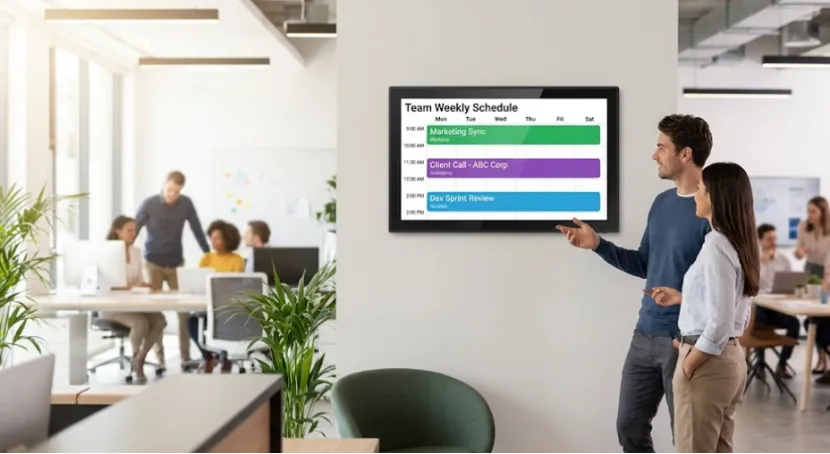
In manufacturing plants, industrial touch screen displays are commonly used as human-machine interfaces (HMI). Workers interact with the production system by touching panels rather than physical control buttons. The Android-based all-in-one touch-based device displays real-time production data, such as machine status, operating instructions, and production progress.
Typical factory applications include: production line control terminals/machine condition monitoring screens/digital operation instruction screens/quality inspection interfaces
Compared to traditional control panels, touch-based interfaces allow for faster updates when the production process changes. Software updates can be done remotely without replacing the hardware.
Warehouse and Logistics Operation Terminals
The logistics center has extremely high requirements for the accuracy of information and operational efficiency. In a warehouse environment, Android touch-screen self-service terminals are widely used for inventory management, cargo transportation, and workflow instructions.
Installed in sorting stations or loading areas, the devices allow workers to scan items, verify shipment status and check storage locations through integrated apps.
Because Android supports many peripherals, the same terminal can be connected to a bar code scanner, RFID reader, printer or camera.
Retail Self-Service and Smart Checkout Systems
Retail stores are increasingly adopting Android touchscreen all-in-one machines as self-service terminals and intelligent checkout devices.
Customers can browse products, check prices and complete transactions without the assistance of store employees. This can improve the service efficiency and reduce labor costs, especially in traffic especially big retail sites.
Android is particularly suited to retail because developers can easily create customised apps for functions such as payments, loyalty schemes and customer interaction.
Key factors for industrial buyers
There are several hardware considerations when choosing a full-featured Android touch device for industrial use.
Processing performance is critical when running professional applications or managing multiple connected devices. Industrial purchasers typically choose chipsets that support stable long-term operation.
Display quality is also an important factor. The high brightness IPS panel improves visibility and durability during intense light or prolonged use.
Connectivity also plays a crucial role. Industrial touch terminals typically require multiple interfaces, such as USB, Ethernet, WiFi, or serial ports, in order to connect to scanners, printers, and control systems.
Finally, the flexibility of promotion should also be considered. Depending on the environment, common installation methods include wall-mounted, embedded, or desktop installation. Conclusion
The Android Touch all-in-one has become a powerful device in several industries. By integrating computing power, touch interaction, and flexible software platforms, these systems provide efficient human-computer interfaces for factories, logistics centers, retail stores, and health care facilities.
For industrial purchasers and systems integrators, choosing the right hardware configuration and integration capabilities is critical to building a stable and scalable digital infrastructure. As more and more industry automation and digital management system, the role of industrial touch-screen display in modern operation will continue to expand.