
If you buy for assisted living, memory care facilities, or home care agencies, you are not really comparing two clocks. You are comparing how much work a resident must do before the screen makes sense. That is the real issue. People living with dementia can lose track of dates, seasons, and the passage of time, so a device that shows only digits often falls short in daily care. That is why a dementia clock keeps coming up in procurement conversations. It speaks more clearly, needs less interpretation, and can fit routine-based care better. YIAISIGN is a display manufacturer in shenzhen, has been in the field of the subsoil for more than 15 years, has four production lines, daily output of up to 3000 units, and provide the OEM/ODM service for global customers, when you need a stable supply, repeatable specifications as well as the consistency between the room, rather than one-off sales of electronic products, It is very important.
What Is a Dementia Clock?
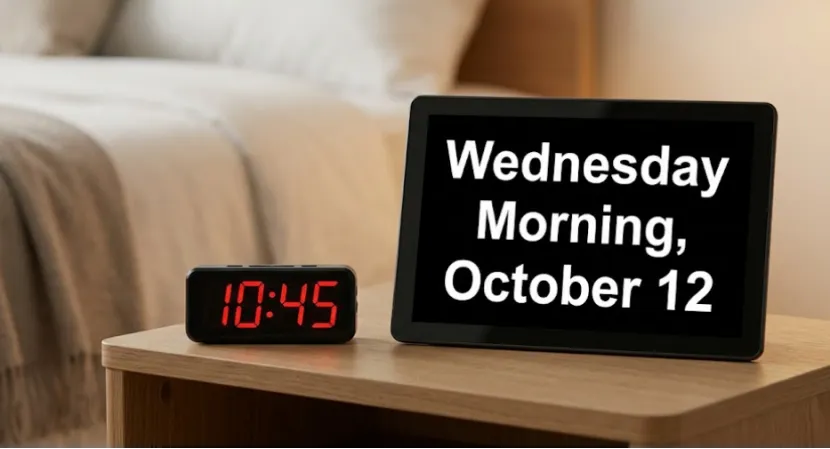
A dementia clock is built to give context, not just time. You use it when the user needs more than “10:45.” In practice, that means a clearer layout, bigger text, full day and date wording, and reminder support that can fit meals, medicine, or everyday tasks. Official product content in this category also keeps returning to the same themes: all-day display, easy operation, multiple reminders, remote control, and healthcare use cases. That pattern tells you something. Buyers are not chasing novelty here. They want clarity and routine support.
Full Day and Date Display
A regular digital clock usually shows numbers first and leaves the rest to the user. A dementia clock does the opposite. It reduces guesswork. Full day names, full month names, and visible morning or evening cues can make a screen easier to read at a glance. That sounds basic. In a resident room at 6:30 a.m., it is not. One official comparison article even points out that full day names such as “Wednesday” instead of “Wed” are easier for users who get confused by short forms.
Large-Display Clock Readability
Screen size matters more than many buyers expect. If a resident reads from bed, from a chair, or from across a shared room, a cramped display becomes a daily friction point. The official product page for the 10.1-inch dementia clock highlights a large IPS screen, no WiFi, remote control, and daily reminder use for seniors and Alzheimer’s patients. In the broader product materials, related day-clock models also stress large-screen readability, low-glare viewing, and auto dimming from 7 PM to 7 AM. Those are not decorative extras. They answer a very ordinary care problem: people need to read the screen fast, even when lighting is poor or energy is low.
Dementia Clock vs. Regular Digital Clock: What Should You Compare?
Once you move past price, the gap gets clearer. A regular digital clock is fine when the user only needs the hour. A dementia clock is a better fit when the user needs orientation support, reminders, and a display that makes sense without staff explanation. If you buy in volume, this is where returns, complaints, and staff feedback start to separate one product type from another.
Ease of Reading at a Glance
A regular digital clock often assumes the user can decode a compact screen quickly. Many older adults can. Many cannot. In dementia care, small shortcuts on the screen can create a bigger problem than buyers expect. Tiny numbers, short day labels, and weak contrast all add friction. A dementia clock is usually better because it puts readable information first. That is why official guidance in this product category keeps stressing big, bold screens, full words, and clear separation between time, day, and date.
Reminder Features and Staff Workflow
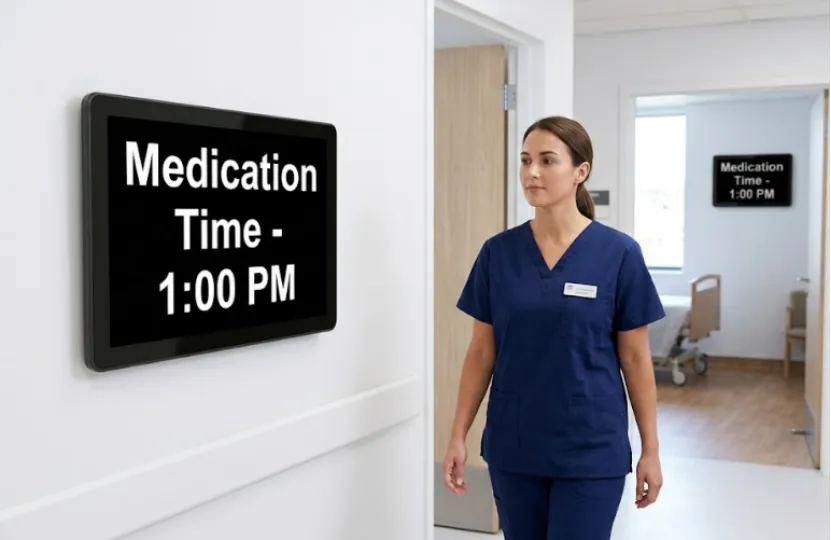
This is exactly where a regular digital clock typically falls short. A dementia clock, conversely, can feature alarms and medication prompts. It also handles hourly broadcasts or daily routine reminders. Furthermore, product guides frequently highlight these devices for healthcare scheduling and patient reminders. They fit perfectly into public information settings, too. This broad versatility genuinely helps B2B buyers. It clearly proves the device isn’t limited to just a bedside table. If you manage multiple rooms, even a simple reminder feature can cut repeated questions and reduce missed routine prompts. Anyone who has watched a rushed med pass knows that small supports matter.
No-WiFi Dementia Clock vs. Connected Models
Some buyers want WiFi for syncing and extra data. Others do not. A no-WiFi dementia clock can be the better pick when you want simple deployment, fewer setup steps, less IT dependence, and fewer changes after installation. The official no-WiFi 10.1-inch product page positions that model around a large screen, remote control, and daily reminder support rather than app-heavy functions. For many care teams, that is the point. Fewer moving parts can mean fewer support calls.
What Do Senior Care Buyers Need from a Supplier?
Once you know the right feature set, the next question is less exciting but more important. Can the supplier keep it consistent across orders? In senior care, one mixed batch can create a mess. Different menus, different layouts, different alarm logic. Staff notice. Families notice too. So do distributors.
Stable Product Specs
If you source for projects, you need repeatable hardware, clear certifications, and a supplier that can support volume, YIAISIGN has over 15 years of industry experience, a 3,000 square meter factory, four production lines, ISO9001 certification, and products meeting CCC, FCC, RoHS, and CE standards. That does not tell you whether every unit is right for dementia care, of course. It does tell you the company is set up for structured manufacturing rather than casual retail turnover. You can also review its broader Digital Day Clock collection when planning internal category links from comparison posts like this one.
Setup Support and Customization
For B2B buyers, high-quality suppliers not only provide products, but also efficiently complete detailed services such as packaging, design, language, brand and customization, which are particularly critical in mass customization. The OEM/ODM capability displayed on its official website covers hardware design, brand promotion, package customization and system support, which is of great value to independent brand operation and precise marketing.
When Is a Regular Digital Clock Enough?
A regular digital clock is enough when you only need basic time checks and the user does not struggle with day, date, or time cues. It can work in staff rooms, reception counters, and low-need bedrooms. But when a resident repeatedly asks what day it is, misses routine cues, or gets mixed up between morning and evening, a basic clock stops being a bargain. It becomes another thing staff have to explain. That is usually the moment buyers move from “cheap digital clock” to “dementia clock.”
FAQ
Q1: What are the main differences between the intelligent clock and the YIAISIGN digital clock?
A: Ordinary digital clocks display the time on a low-pixel screen, while high-quality smart clocks are designed to display the time, date and usual daily reminders in a way that is easier for the elderly and people with memory impairments to read quickly.
Q2: Is an internet-free intelligent clock better for elderly care institutions?
A: If you want easy installation, fewer connection problems, and less training requirements for employees, then the large screen display without a network smart clock is usually a better choice.
Q3: What functions should elderly care purchasers compare first?
A: First, compare display size, full time and date representation, reminders, brightness adjustment, remote control, and the ease with which the device can be set up in multiple rooms.
Q4: Can the intelligent clock help with medication reminders?
A: Many YIAISIGN products come with reminders or alarms to help users manage their medications, schedule meals, and carry out daily tasks.
Question 5: Under what circumstances is a regular digital clock still applicable?
A: It’s also useful for users who just need to check the time without additional directional support. However, for dementia care environments, it is usually insufficient.


