Walk through a modern store and you can feel the tension. Teams want displays that look premium, stay consistent, and do not turn the space into a blinking “screen wall.” At the same time, pricing, campaigns, and visual stories still need updates. That mix is exactly why AI E-Ink frames are getting serious attention heading into 2026.
This is not a trend built on hype. Retail visual merchandising has been shifting toward calmer, more “printed” visuals that still update remotely. If you want the bigger picture behind the shift, this deep dive on why retail visual merchandising is changing sets the foundation.
Retail Visual Merchandising Was Already Under Pressure Before 2026
Store Design Priorities Are Shifting From Attention to Presence
In 2026, many stores will look more like curated spaces and less like ad containers. That shift changes what “good display” means. Motion is not always a win. High brightness is not always a win either. When the goal is mood, texture, and premium feel, a paper-like display can carry a story without shouting.
This is where the old idea of an “e ink picture frame” starts to evolve. It stops being a gadget and becomes a surface you can place into the space like a print, then refresh when you need.
Energy, Maintenance, and Staffing Costs Reach a Breaking Point
E-Ink changes the operating model. Power use stays low because the display mainly draws energy when you change content. Maintenance load drops because you are not pushing video playback all day. Even when battery is low, the last image can stay visible, which avoids blank screens during long opening hours.
Why 2026 Becomes a Turning Point for Retail Displays
It’s tempting to treat “2026” as a marketing timestamp. In retail, the year marker matters for a more practical reason: a lot of teams are rethinking store formats, staffing, and lifecycle cost at the same time. When budgets tighten, the question shifts from “What looks flashy?” to “What stays reliable and easy for daily use?”
Retail display trends in 2026 will reward systems that reduce daily friction. AI and E-Ink pair well here, because one solves content workload and the other solves the physical display burden.
Technology Maturity Reaches Commercial Stability
Color E-Ink has moved beyond the early “label-like” look. The product brief you’re working from calls out full-color Spectra 6 and a paper-like viewing experience that stays comfortable for long viewing sessions. It also highlights an ultra-low power design and a wireless setup that removes the constant cable problem.
AI is the other half. Instead of relying on a designer for every micro update, you can generate campaign visuals from prompts, sketches, or photos, then push them to the frame through the app.
Retail Teams Need Faster Content Without More Busywork
A frequent pain point isn’t a shortage of ideas. It’s time. Retail teams usually need dozens of small adjustments rather than one sweeping rebrand. That might mean a short line for a gift set, a visual mood for a shelf endcap, or a localized message for a single store. AI helps you create those fast, then E-Ink keeps them on-display without turning the space into a screen show.
One small human note: if your merchandising calendar already feels like a messy group chat, adding more screens rarely makes it calmer. Better tools matter. So does restraint.
From Screens to Surfaces: A New Retail Display Logic
Retail is not reducing displays. It is changing the role of displays. “Screen” implies motion and constant stimulation. “Surface” implies presence, consistency, and long-term placement. That language shift sounds subtle, yet it changes buying decisions.
AI E-Ink displays fit surface-based retail logic. They behave more like premium printed materials, except updates can be remote and quick.
What “Surface-Based Display” Means in Retail Spaces
Surface-based display is not a buzzword. It’s a set of behaviors you can test in-store:
- The visual sits naturally inside the environment
- Shoppers can read it without glare or eye strain
- The content stays stable for hours or days
- Updates happen when the campaign changes, not every minute
That is the reason a wireless art frame can win placements where screens feel out of place. It can hang in a window zone, blend into a feature wall, or sit on a display table without forcing a cable run.
Quick Comparison: Screen Logic vs Surface Logic
| Retail Need | Traditional LCD/LED Screen | AI E-Ink Frame |
|---|---|---|
| Store ambience | Can feel “screen-heavy” in lifestyle spaces | Paper-like, calmer presence |
| Power model | Constant draw while on | Low draw, mainly during refresh |
| Best content | Video, motion, countdowns | Static visuals, themed artwork, product story |
| Placement | Often needs power routing | Can be cordless for cleaner setup |
| Update workflow | Can be heavy if you run many screens | Remote updates + AI-assisted creation |
This is not saying screens disappear. Video still has a place. The point is that not every retail visual should behave like video.
How AI Changes Retail Visual Merchandising by 2026
AI in retail display is often discussed like a creative tool. In practice, the bigger value is operational. It shortens the time between “campaign idea” and “campaign on the wall.” It also reduces dependency on one person who knows the template, the fonts, and the export settings.
When you pair AI creation with E-Ink display, you get a workflow built for real stores: fewer steps, fewer file versions, fewer last-minute fixes.
From Manual Content Updates to Assisted Merchandising
The product brief calls out creation methods that feel natural: voice chat, drawing, or uploading photos. It also mentions 50+ styles, built-in classic art, and sharing features for remote uploads. That mix supports both branded campaigns and softer “mood visuals” that make a store feel intentional.
If you run multiple locations, a shared gallery and remote control model matters. Central teams can push updates while local teams focus on execution on the floor.
Why AI Matters More for Static Displays Than Dynamic Screens
Dynamic screens create a hidden content tax. If a screen is capable of motion, someone feels responsible for feeding it motion. Static visuals remove that pressure. AI then fills the gap by making static visuals easy to produce and refresh when needed. It’s a calmer system, which is a rare sentence in retail operations.
Where AI E-Ink Frames Fit Best in Retail Environments
Placement decides whether a display works. A device can be impressive on a spec sheet and still fail because it doesn’t fit the store rhythm. E-Ink works best where you need stable visuals that look premium for long periods, with occasional updates.
Window Displays and Street-Facing Visuals
Glare and brightness battles show up fast in windows. A paper-like display that stays readable in bright environments can help support a story without looking like a TV in the glass. If your window is seasonal storytelling, that calm look can feel more “designed.”
In-Store Zones for Brand Storytelling and Product Context
Endcaps, feature tables, and lifestyle corners often need readable context: scent notes, ingredient highlights, craft stories, or set bundles. These zones change weekly, sometimes daily, but they do not need animation. They need clarity.
The product brief also mentions widgets like weather, calendar, and news. In some retail formats, that can be useful for staff-facing zones or brand experience corners, as long as it stays on-brand and not noisy.
Temporary Campaigns Without Temporary Hardware
Campaigns come and go. Hardware stays. That mismatch is why stores end up with mismatched screens, aging tablets, and random stands. A long-life display format that can refresh content without new hardware each season is easier to scale.
Where the Same Display Shift Is Starting to Appear Beyond Retail
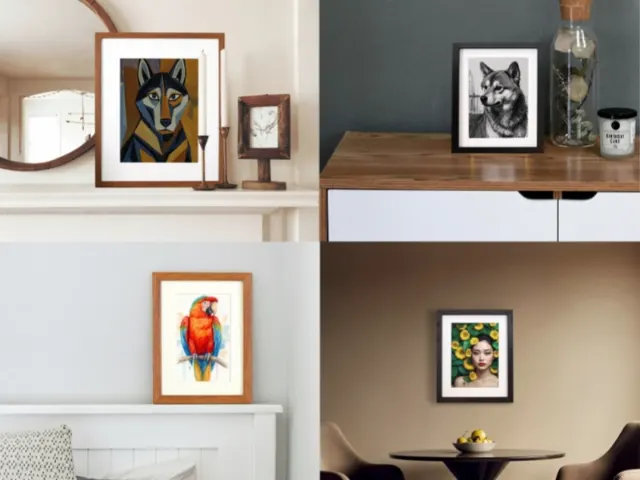
Retail is often the first place where display shifts become visible because stores refresh visuals constantly. Similar pressures are showing up elsewhere too. Hospitality spaces want less “screen feel.” Semi-public environments want reliable visuals without constant power draw. Homes may become a long-tail signal as more people treat digital art like decor, especially when a wireless art frame feels like part of the room.
This does not mean your retail strategy should copy other industries. The point is simpler: the “surface” idea is spreading because it solves common problems.
What This Shift Means for Retail Brands and Solution Providers
By 2026, “display choice” is less about a single device and more about a program: sizing, mounting, content workflow, remote management, and lifecycle cost. Brands that plan display programs early avoid the usual trap of mixing five different systems across stores.
As retailers rethink long-term rollout decisions, interest is shifting from single-purpose screens toward modular, low-maintenance formats. This is where AI E-Ink display solutions begin to make sense as a category, especially for brands planning scalable visual programs across different store types.
Why Customization and Size Flexibility Matter More After 2026
Stores are not uniform. Neither are display placements. A brief that supports custom sizes (the reference material mentions 7–32 inch customization) gives you more freedom to match window zones, wall features, and table displays without awkward workarounds.
In practice, this often leads retail teams to look for hardware that can stay in place for long periods while still allowing visual updates when needed. A wireless art frame designed for long-term display fits this requirement well, especially in window zones or brand storytelling areas where constant motion is unnecessary.
Why YIAISIGN Makes Sense for Retail Rollouts
YIAISIGN focuses on digital display products used in retail and branded environments, including digital art frames, digital signage, and related smart display formats. You get an OEM/ODM partner that supports both hardware and the practical realities of deployment: stable supply for pilots and scale-ups, customization options across form factors, and an ecosystem mindset rather than a one-off device. If your retail plan needs consistent visuals across locations, remote content workflows, and clean installations that do not force cable compromises, YIAISIGN is positioned as a long-term build partner, not just a catalog listing.
FAQ
Q1: What makes an AI E-Ink frame different from a normal digital signage screen?
A: You get a paper-like display that stays calm and readable, plus low power behavior. It’s built for static or themed visuals that change when your campaign changes, not every second.
Q2: Can an e ink picture frame work in bright store lighting or window areas?
A: That’s one of the reasons retailers consider it. E-Ink is meant to be readable in brighter environments than many glossy screens, so it can suit window storytelling and high-light zones.
Q3: How often should you refresh content on AI E-Ink displays in retail?
A: Think in “campaign rhythm.” Daily or weekly changes make sense for promos, bundles, or seasonal messaging. Constant rapid changes do not match how E-Ink is meant to be used.
Q4: What should you ask before sourcing an AI E-Ink frame for retail use?
A: Ask about size options, mounting, remote update workflow, power behavior during long opening hours, local storage capacity, and how the app handles multi-user or multi-store control.