1.Introduction: The demand for integrated commercial hardware
The contemporary B2B landscape is characterized by a constant quest for efficiency, enhanced user experience, and reduced operational complexity.Traditional multiple component systems (independent computer, screen, and input devices) has brought the maintenance overhead and physical disorders.All-in-one (AIO) touchscreen displays address these challenges by integrating all the necessary computational and display components into a single, smooth unit.
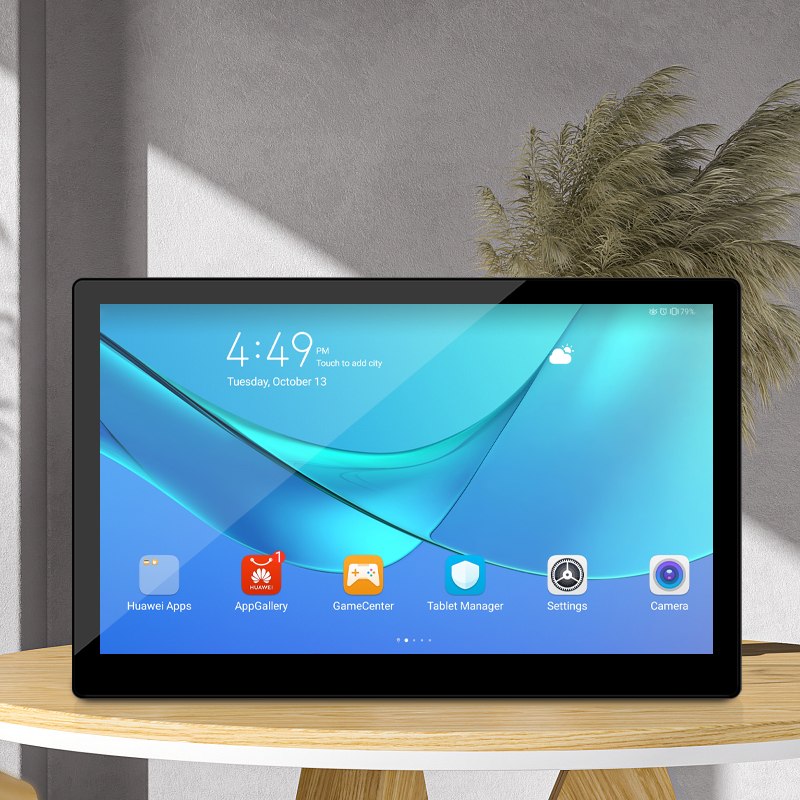
A typical example is the 10.1-inch AIO (model: YIT11A-10.1), which leverages the power of the Android 11.0 operating system and a dedicated processor architecture to provide versatility in different commercial environments.
2. Technical Overview and performance backbone
The applicability of AIO to demanding B2B applications is guaranteed by its strong internal standards:
- Display quality: 10.1-inch screen with a native resolution of 1280×800 RGB and 16:10 aspect ratio.Brightness is specified at 250 nits, with ample 800:1 contrast ratio and a wide 178°/178° viewing Angle, ensuring clear visibility in a variety of lighting conditions.
- Processing power: A 4-core Cortex-A55 processor with a main frequency of 1.8GHz, driven by Rockchip RK3566 motherboard.This configuration support demanding kiosk applications needed to efficient multitasking.
- Memory and storage: Equipped with 4GB DDR memory and 32GB EMMC flash memory, providing sufficient speed and capacity to run commercial applications, multimedia, and store operational data.
- I/O (Input/Output) generality: including 5 v2a / 12 v dc power Input, MINI USB (x1), standard USB (x1), SD card interface (x1), the convenient connection scanner, printer, or external storage peripherals.
3. Core B2B application ecosystem
A. Interactive digital signage and wayfinding kiosk
AIO’s bright, responsive touch screen makes it an excellent choice for self-service points.
- User interaction: With the 5-point touch function, users can easily navigate menus, access directories or register for services.
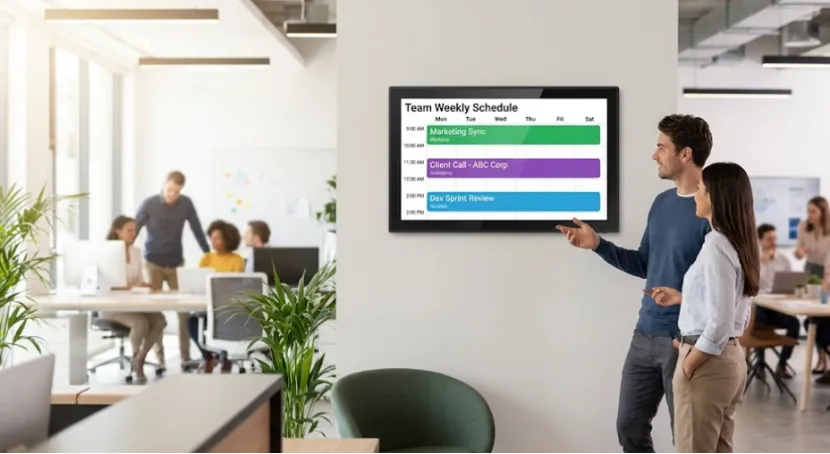
- Deployment flexibility: The mechanical design supports wall-mounted installation and can be deployed in public areas, corporate halls or exhibition stands, where space efficiency is essential.It is an intuitive interface that is used to display dynamic content, propaganda video and interactive maps.
B. Customized POS terminals
AIO offers a streamlined alternative to the traditional cash register system.
- Retail and Hospitality: Its compact product size (255*166*7mm, not including stands) and high stability allow it to effectively serve as a dedicated ordering or check-in terminal for restaurants, cafes or boutiques.
- Advantage: the Android ecosystem run Android 11.0 provides a huge commercial POS and payment processing of direct access to the application of ecological system, simplify the software development and integration.

4. Operational and design advantages for commercial use
In addition to its original technical specifications, AIO offers unique commercial benefits:
- Simplified maintenance: yiaisign all-in-one design reduces cabling and compatibility issues, reducing the complexity and cost of IT maintenance in large-scale deployments.
- Customization potential: Cases are available in white and black, allowing businesses to match the aesthetics of their devices to their branded environment.
- Energy efficiency: equipment power saving ≤2W, the maximum actual power consumption ≤24W, energy saving and high efficiency, reduce long-term operating costs.
- Special control: has the front control such as power/menu/OK (key), even in the touch screen lock or disable specific purposes, may also need to touch control management and service function.
5. Conclusion: A platform for future B2B growth
yiaisign10.1-inch Android AIO touchscreen display is more than just a screen;It is a foundational component of the next generation of B2B infrastructure.Its powerful architecture (RK3566/Android 11.0), coupled with dedicated features such as MIC arrays and general-purpose I/O, makes it perfect to support the growing need for interactivity, communication, and efficiency across key business sectors.Using this integrated technology companies are strategically invest in simplified operation and excellent experience of customers and employees.